When people talk about AI and design, the conversation usually jumps to one question: Will AI replace designers?
At Metova, we start with a different question: Where does a designer’s judgment matter most, and where can the work simply move faster?
Once we started experimenting, the pattern was clear: AI speeds up the groundwork, and our designers get more time for the decisions that shape the product.

Separating the routine work from the design decisions
A UI project can seem straightforward but there's a surprising amount of work between “we need a screen for this” and final high-res designs. Items like:
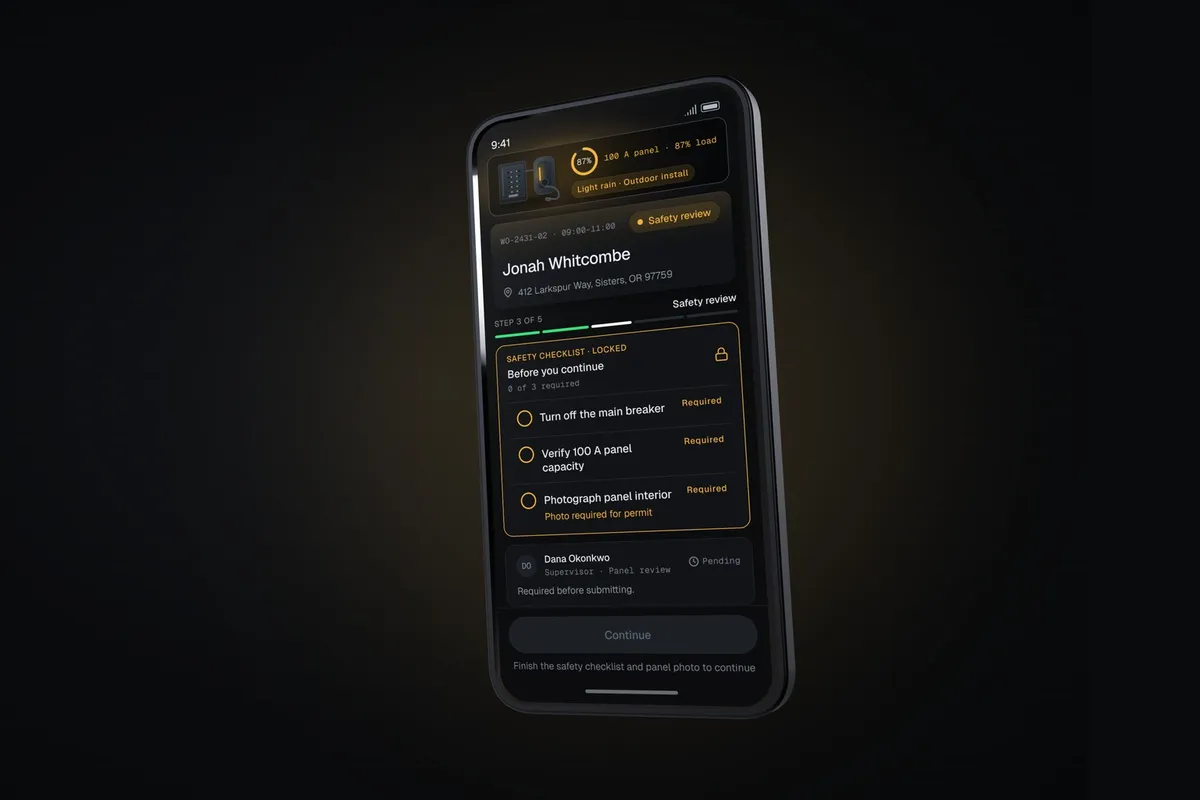
- Turning requirements into screens, flows and states
- Documenting components and design rules
- Exploring different visual directions
- Writing real copy to replace "lorem ipsum"
- Reviewing the work and catching anything that slipped through
All of it matters, but only part of it needs a designer’s expertise. AI moves the rest along, so our team can focus on the decisions that shape the product.
Consolidating ideas, goals and needs into one plan
Every project starts with a mix of inputs: an idea, business goals, user needs, stakeholder opinions, existing products and edge cases that haven’t surfaced yet.
Our Discovery phase brings it all together, and it starts with conversations between people. AI then helps us organize and summarize what we learn, so strategy, design and engineering all work from the same plan.
Exploring more ideas in less time
This is one of the most valuable ways we use AI. We can generate several directions, put them side by side and start reacting right away.
Not every idea is a keeper, and that's part of the value.
A weak direction shows us what to avoid, and that makes the stronger directions more clear.
Design systems that evolve faster
A lot of hidden time goes into design systems. AI makes changes quicker, so we're more willing to experiment.
Does that accent color have enough contrast? Does the type feel too corporate? Would a new font change the personality of the product?
When an experiment takes minutes instead of hours, we can test the idea instead of debating it. A well-built design system also carries straight into code, so those decisions reach our engineers sooner.
There are some rules we try to stick to
Using AI doesn’t automatically make the work better.
So we’ve developed a few habits:
- Lead with context. The more we understand the audience, platform, accessibility requirements, technical constraints and brand, the more useful the output tends to be.
- Don’t outsource taste. AI can give us options. A person on our team still asks, "Does this actually feel right?"
- Check the small details yourself. Accessibility needs human eyes. Someone on our team reviews contrast, touch targets, focus states and keyboard behavior.
- Protect what makes each product distinct. AI is good at producing something that looks fine, but "fine" is rarely the goal. Strong creative direction keeps the work original and true to each client's brand.
- Design for growth. We build every design on a scalable foundation, so new features can be added later without starting over.
So, does AI make design faster?
Yes, just not in the way most people expect.
AI speeds up the work that leads to a decision: organizing research, sorting references, exploring variations, writing documentation, catching the empty state everyone forgot and producing the fifth version of the same screen.
The decisions stay with our designers: understanding the user, weighing trade-offs, questioning the obvious solution, getting the small details right and knowing when a design feels considered rather than generic.